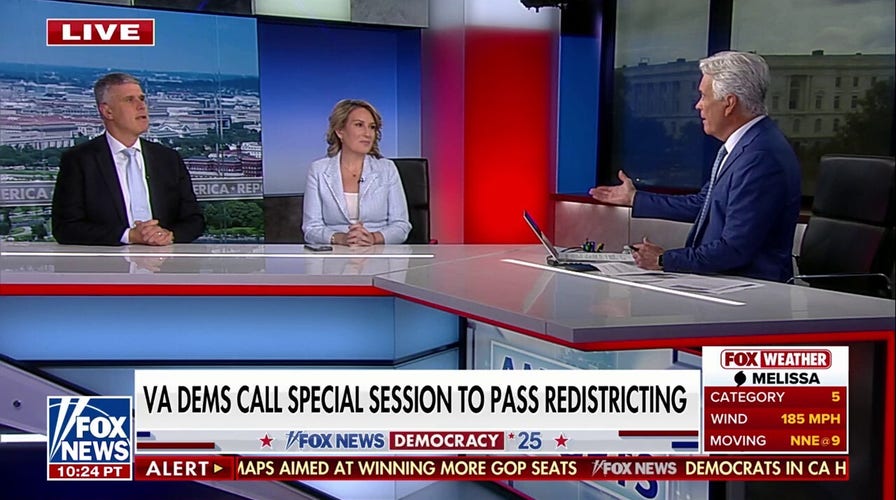
A federal judge’s pointed questions and visible hesitation during a recent Virginia redistricting hearing signal growing judicial scrutiny over how race influences district boundaries. The case, which challenges the constitutionality of Virginia’s newly drawn legislative maps, hinges on whether race was improperly used as a dominant factor in shaping districts—potentially violating the Equal Protection Clause and the Voting Rights Act. The judge’s skepticism didn’t come in sweeping statements but in sharp, probing inquiries that exposed inconsistencies in the state’s defense and bolstered arguments from civil rights groups.
This isn’t merely a technical dispute over map lines. It’s a high-stakes constitutional confrontation rooted in how fairly Black voters are represented in a state with a complex racial and political history. The court’s tone suggests the outcome could unravel carefully negotiated political compromises—or force Virginia back to the drawing board.
The Hearing That Revealed Judicial Doubts
Inside the Richmond federal courthouse, the atmosphere was tense. Lawyers for the Virginia General Assembly argued that the redistricting process had followed legal guidelines, emphasizing compliance with the 2020 census and efforts to increase minority representation. But the judge, known for a methodical and incisive style, interrupted early and often.
One exchange stood out: when a state attorney claimed race was “just one of many factors,” the judge responded, “Then why do the highest concentrations of Black population align so neatly with district boundaries?” The question cut to the heart of the issue—intent versus outcome. Even if race isn’t explicitly the driving force, does its predictable correlation with map design suggest otherwise?
The judge also questioned the state’s use of “compactness” as a neutral justification, noting that some districts stretched across highways and municipal lines in ways that defied geography but maximized or minimized Black voter influence. This line of inquiry revealed a deep skepticism toward technical justifications that may mask racial engineering.
Why Judicial Skepticism Matters in Redistricting Cases
In constitutional law, tone matters. A judge’s skepticism isn’t a ruling, but it’s often a reliable indicator of where the decision may land. In redistricting litigation, federal judges wield enormous power to invalidate maps, order new ones, or even impose deadlines that disrupt electoral timelines.
Here’s why this particular hesitation carries weight:
- Precedent sensitivity: The Supreme Court’s rulings in cases like Miller v. Johnson (1995) and Bethune-Hill v. Virginia State Bd. of Elections (2017) established that race cannot be the “predominant factor” in redistricting unless justified by compelling state interests. The judge’s focus on intent and causation echoed those standards.
- Remedial power: If the court finds unconstitutional racial gerrymandering, it can require a special master to draw new maps—bypassing the legislature entirely.
- Political consequences: With state elections looming, any delay or map overhaul could shift the balance of power in the General Assembly.
The judge’s body language—leaning forward, frequent note-taking, terse follow-ups—underscored impatience with evasive answers. This wasn’t passive listening; it was active scrutiny.
The Core Legal Battle: Race, Representation, and Intent
At issue are 11 state Senate and 11 House of Delegates districts where plaintiffs argue race was the primary factor in boundary decisions. Civil rights organizations, including the ACLU of Virginia and the Legal Defense Fund, filed the suit, claiming that the maps dilute Black voting power in places like Hampton Roads and Richmond.

Their argument centers on two key claims:
- Racial Sorting: District lines were drawn to pack Black voters into specific districts, reducing their influence in surrounding areas.
- Lack of Neutral Justification: The state’s stated reasons—compactness, respecting municipal boundaries, and partisan balance—don’t hold up under scrutiny when race explains the anomalies.
For example, in the Hampton Roads region, one district stretches 50 miles along a narrow corridor, linking Black communities separated by water and economic zones. The state claims this preserves “community of interest,” but demographers testified that economic and cultural ties don’t align with the district’s shape—racial demographics do.
The judge zeroed in on this disconnect. “If community of interest is the goal,” they asked, “why doesn’t the map reflect school districts, labor markets, or transportation networks?” The question underscored a broader judicial concern: when race correlates too perfectly with map design, it raises red flags—even if officials claim neutrality.
What Past Cases Reveal About This Judge’s Leaning
Legal observers noted eerie parallels between this hearing and Bethune-Hill, a 2015 case that reached the Supreme Court. In that case, a federal panel—including one of the same judges now presiding—struck down 12 Virginia House districts for racial gerrymandering. The court found that the legislature had used race above all else to meet a 55% Black voting-age population target.
The current judge, having lived through that precedent, appears unwilling to let similar patterns slide. During the hearing, they referenced Bethune-Hill multiple times, asking if the state had truly learned from past mistakes. “You said you reformed the process,” they remarked. “But the outcomes look awfully familiar.”
This isn’t just about consistency—it’s about judicial credibility. A ruling that upholds maps with such strong racial correlations could undermine public trust in both the redistricting process and the judiciary’s role in checking it.
How Technical Defenses Are Being Tested in Court
Virginia’s defense relies heavily on technical justifications: compactness scores, municipal integrity, and partisan fairness metrics. But the judge’s skepticism exposed the fragility of these arguments when used to deflect racial impact.
For instance:
- Compactness: The state touted high compactness ratings, but the judge noted that some districts achieved this by carving around Black neighborhoods rather than through organic boundaries.
- Municipal Boundaries: While the maps claim to respect city lines, several split historically Black communities within cities like Norfolk and Petersburg—undermining the integrity argument.
- Partisan Balance: The legislature argued that maps reflect political competition, but the judge questioned why Republican-leaning Black voters were grouped separately from white Republicans.
These exchanges revealed a deeper judicial demand: transparency. The court wants to see not just the final product, but the decision trail—emails, draft maps, internal notes—that show how choices were made. One lawyer was pressed repeatedly: “Can you show me a single document where race was explicitly deprioritized?”
Real-World Impact on Voters and Elections
Behind the legal jargon lies a tangible effect on real people. In Portsmouth, a traditionally Black-majority city, the new map splits the population across three districts. Local leaders say this fragments their ability to elect candidates who reflect their priorities—from school funding to policing reform.
“It’s not just about winning seats,” said a community organizer who testified. “It’s about having a voice in decisions that shape our lives. When you slice up neighborhoods, you silence them.”
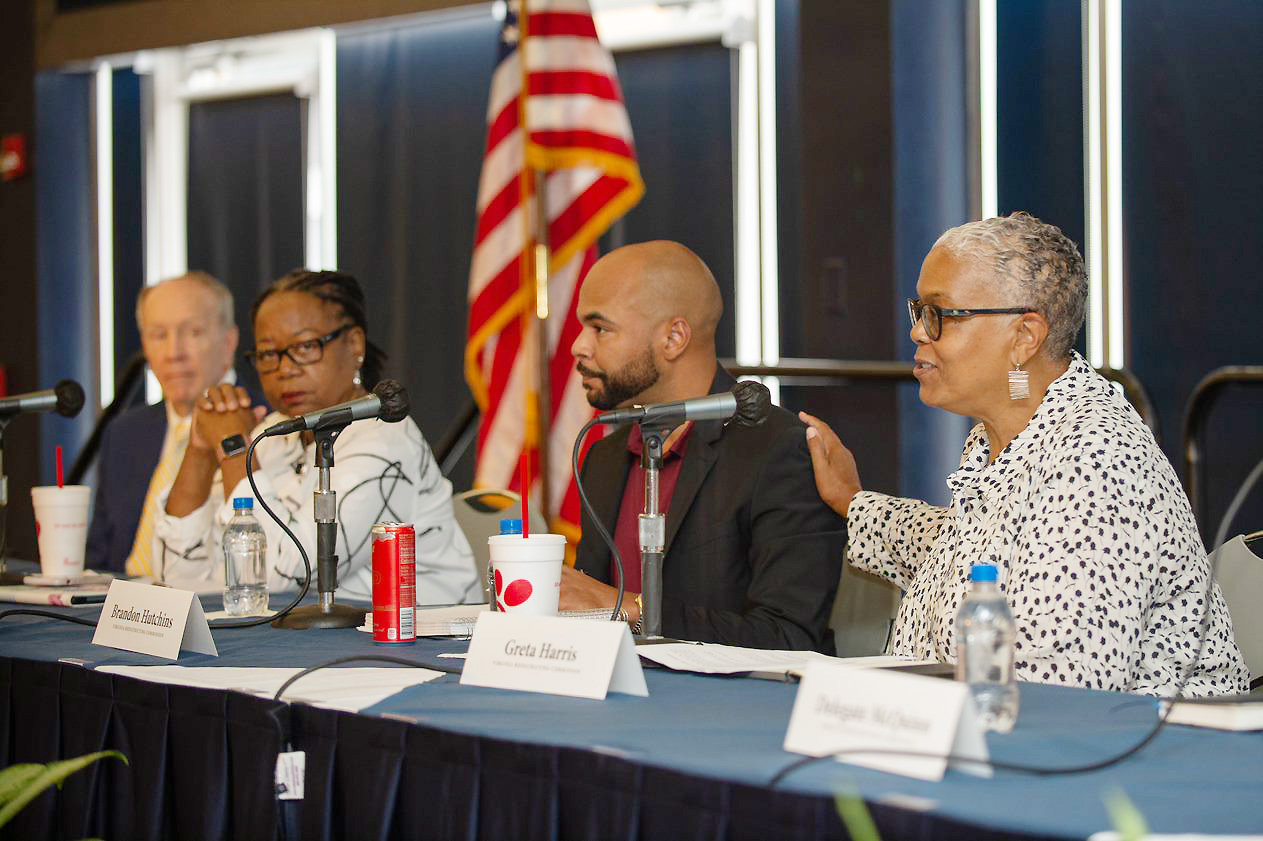
If the court rules against the current maps, special elections could be triggered, or new maps drawn in time for the next cycle. But delays risk voter confusion and legal chaos. The judge acknowledged this, warning both sides: “We need resolution, not more litigation.”
Still, the principle at stake—equal representation—may outweigh logistical concerns. As the judge noted, “Democracy doesn’t work when the map decides the outcome before the votes are cast.”
What Happens Next in the Virginia Redistricting Fight
The hearing concluded without immediate rulings. Both sides now await a written decision, expected within weeks. Legal experts predict several possible outcomes:
- Full invalidation: The court strikes down the challenged districts and appoints a special master.
- Partial remedy: Only a few districts are redrawn, possibly by the legislature.
- Dismissal: The court accepts the state’s neutral justifications, allowing maps to stand.
Given the judge’s skepticism, the first scenario appears increasingly likely. If so, Virginia could see court-drawn maps for the first time since the 1960s.
Meanwhile, the case may be appealed, potentially reaching the Supreme Court. With the Court’s recent narrowing of Voting Rights Act protections in Allen v. Milligan (2023), the national landscape is shifting. But Virginia’s history—marked by decades of racial disenfranchisement—may weigh heavily on federal judges committed to equitable representation.
A Crucial Moment for Fair Representation
The judge’s skepticism in the Virginia redistricting hearing isn’t just a courtroom detail. It’s a signal that courts remain a critical check on racial manipulation in politics. When maps appear too convenient, when race aligns too neatly with boundaries, judges are obligated to ask: Why?
Virginia now sits at a crossroads. It can choose transparency, embrace independent redistricting reform, and build trust. Or it can continue refining technical defenses that obscure deeper inequities.
The decision may hinge on a few pointed questions from one judge. But its impact will ripple across communities, elections, and the future of fair representation in the Commonwealth.
Act now: Citizens concerned about redistricting should engage with the Virginia Redistricting Commission, attend public hearings, and support nonpartisan mapping initiatives. Accountability starts with awareness.
FAQ
What does judicial skepticism mean in a redistricting case? It indicates that the judge has serious doubts about the legality or reasoning behind the maps, often foreshadowing a potential ruling against them.
Can a judge throw out Virginia’s entire redistricting plan? Yes, if the court finds unconstitutional racial gerrymandering, it can invalidate specific districts or the entire plan and order new maps.
What is racial gerrymandering? It occurs when district lines are drawn primarily based on race, diluting minority voting power or concentrating it unfairly, which may violate the Constitution.
Why is race considered a problematic factor in redistricting? While race can be one consideration, making it the predominant factor without strong justification violates equal protection rights, as established by Supreme Court rulings.
How does this affect upcoming elections in Virginia? If maps are overturned, special elections or redrawing could delay or alter candidate filings and voter districts, impacting campaign strategies and outcomes.
Who draws new maps if the court rejects the current ones? A federal court may appoint a special master—an independent expert—to draw nonpartisan, constitutionally compliant maps.
What can citizens do to influence redistricting? Attend public hearings, submit community maps, advocate for independent commissions, and support transparency in the legislative process.
FAQ
What should you look for in Judge Sounds Skeptical in Virginia Redistricting Fight Hearing? Focus on relevance, practical value, and how well the solution matches real user intent.
Is Judge Sounds Skeptical in Virginia Redistricting Fight Hearing suitable for beginners? That depends on the workflow, but a clear step-by-step approach usually makes it easier to start.
How do you compare options around Judge Sounds Skeptical in Virginia Redistricting Fight Hearing? Compare features, trust signals, limitations, pricing, and ease of implementation.
What mistakes should you avoid? Avoid generic choices, weak validation, and decisions based only on marketing claims.
What is the next best step? Shortlist the most relevant options, validate them quickly, and refine from real-world results.